|
Panhandling For Liptooths |
|
|
By Harry G. Lee |
|
|
[Click on the images for a higher resolution version | more images.] |
|
|
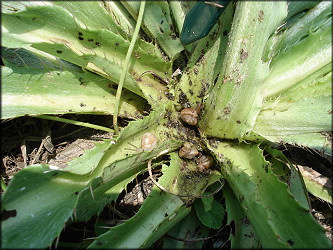
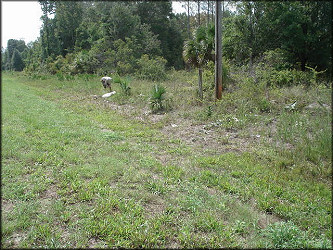
While on a beach vacation on St. George Is., near Appalachicola, Florida during the second week of August, 2007, the writer and fellow landsnailer Ed Cavin set out on three half-day collecting trips with special attention to Liptooth (Daedalochila) habitats. Of these ecosystems the most provident have proven to be open grass areas along roadways and railways. Although these disturbed and marginal habitats support a less diverse biome, members of this genus of snails, along with the very tolerant generalist Polygyra species, seem to have adapted to them especially well. We armed ourselves with Internet downloads from the malacological database of the Florida Museum of Natural History and that of the Field Museum (Chicago) including specific stations at which Liptooths had been collected historically in this neck of the woods. Only three of about ten of these localities visited produced specimens, but another three stops, selected based on geographic interest and collector intuition, added to the catch. Most snails were dead-collected, and initially it seemed that living specimens might not have survived in the intense heat (over 100 degrees F) and paucity of recent rainfall. The ground was parched even deep among the grassy copses in the roadside swales where dead shells were not uncommon once located. Then an epiphany occurred! Using workman's gloves and potato rakes, we braved the awesome nettles of large (up to two feet across) thistles and splayed these plants open. The deep recesses of the leaves a few of these plants actually harbored living snails. This microhabitat provided all our living material and was productive at three of the six stations. These few dozen specimens along with many dozen empty shells allowed a conchological analysis of specimens from the six stations in four counties stretching over 80 miles from western Franklin to northwestern Lafayette and including Taylor and Wakulla Cos. |
|
|
|
|
|
Thistle Microhabitat (Ed Cavin Photo) |
Roadside Swale (Ed Cavin Photo) |
|
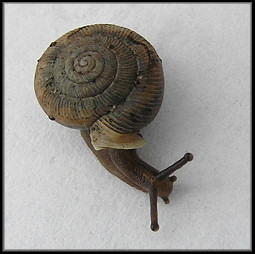
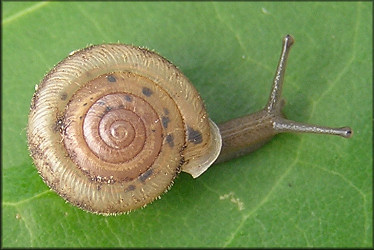
Among the dominant smaller Liptooths, two species are involved: D. hausmani (Jackson, 1948) in Taylor Co.,* and D. subclausa (Pilsbry, 1899) in Jefferson, Wakulla, and Franklin Cos.* A living specimen of each is shown below. Snails from the three Panhandle stations were relaxed and preserved in 70% ethanol for dissection and others placed in 95% ethanol for DNA analysis (molecular genetics) as part of the continuing investigation of the systematics and evolution of this spectacular but confusing group. |
|
|
A second, much larger, congener was found living with D. hausmani at one station in western Taylor Co. (See: Daedalochila auriculata In Western Taylor Co., Florida). |
|
|
|
|
|
Daedalochila subclausa from extreme W Franklin Co. |
Daedalochila hausmani from extreme W Taylor Co. |
|
*Later a single specimen of D. hausmani was found in Franklin Co. on October 13, 2009. |
|
|
|
|