|
 Due to the effects of the Mississippi,
Atchafalaya, and Calcasieu Rivers, the Louisiana coastal areas consist mainly of
marshland and beaches composed of mud or muddy sand. This type of rather
uniform shoreline habitat is inimical to molluscan diversity. In contrast,
offshore habitats are more diverse. Besides the prevalent muddy bottom, the many
offshore oil-rig platforms act as artificial reefs, making it possible for
epifaunal bivalves of the families Arcidae, Ostreidae, Chamidae and Spondylidae
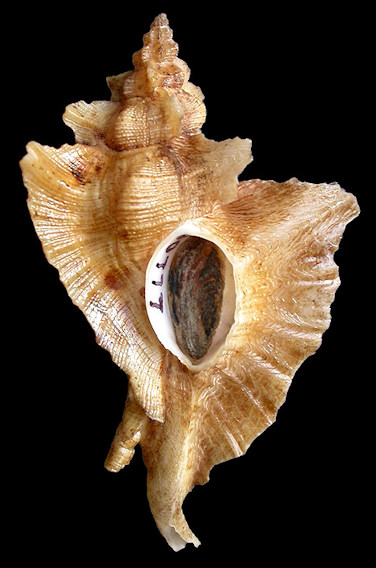
to prosper and with them, the predators Stramonita
haemastoma and Hexaplex fulvescens. Hydrocarbon vents on the
continental slope off the Louisiana coast have also created an ecosystem with an
interesting molluscan fauna (see Carney, 1994 and Warén and Bouchet, 1993).
However, the most diverse of the offshore habitats are the series of calcareous
banks that arise abruptly from the deep, soft, muddy sediment to approximately
20 to 90 m from the surface and which are inhabited by a rich molluscan fauna.
Parker et al. (1956) have recorded some 130 such banks off the Texas and
Louisiana coasts. These banks, particularly those off Louisiana, are essentially
calcareous islands in a sea of mud, and their molluscan species are quite
different from the surrounding soft bottom. Due to the effects of the Mississippi,
Atchafalaya, and Calcasieu Rivers, the Louisiana coastal areas consist mainly of
marshland and beaches composed of mud or muddy sand. This type of rather
uniform shoreline habitat is inimical to molluscan diversity. In contrast,
offshore habitats are more diverse. Besides the prevalent muddy bottom, the many
offshore oil-rig platforms act as artificial reefs, making it possible for
epifaunal bivalves of the families Arcidae, Ostreidae, Chamidae and Spondylidae
to prosper and with them, the predators Stramonita
haemastoma and Hexaplex fulvescens. Hydrocarbon vents on the
continental slope off the Louisiana coast have also created an ecosystem with an
interesting molluscan fauna (see Carney, 1994 and Warén and Bouchet, 1993).
However, the most diverse of the offshore habitats are the series of calcareous
banks that arise abruptly from the deep, soft, muddy sediment to approximately
20 to 90 m from the surface and which are inhabited by a rich molluscan fauna.
Parker et al. (1956) have recorded some 130 such banks off the Texas and
Louisiana coasts. These banks, particularly those off Louisiana, are essentially
calcareous islands in a sea of mud, and their molluscan species are quite
different from the surrounding soft bottom.
The mollusks in this list were collected from approximately 20 m to
1745 m; from Latitude 27º.35’N to 29º.20’N and from Longitude
88º.15’ W to 93º.18’ W. They were obtained by SCUBA diving,
trawling, dredging, and with core grabs in mud, silty sand,
calcareous rubble, and hydrocarbon vents. The sediment obtained from
such collecting methods was passed first through a 1/4" mesh and
then through a 1/16" mesh to preserve the smaller species. Since
2007 the “Pelican” has been using the Benthic Skimmer (see García,
2007), a large dredge specially designed for the very soft silt that
is found in the deep water benthos. This dredge has produced many
species not collected by earlier designs.
Of the 677 species-level taxa listed, 200
are reported herein as new records for the northwestern Gulf of
Mexico and comprise approximately 29% of the total. Each of these is
marked with an asterisk (*). However, most of these new records
have now appeared in Rosenberg et al. (2009). Many of the species
have never been reported from the continental United States, and
some have been recently described. For easier access, we have not
attempted to rearrange the order of genera formerly assigned to "Turridae"
. They remain alphabetized under that umbrella taxon. As time
permits, illustrations will be added to accompany the list; these
species-level taxa will be conspicuously identified.
We would like to thank
the following persons for contributing to the accuracy of this list
as well as for calling to our attention some overlooked references:
Roe Davenport (San Antonio, Texas), Colin Redfern (Boca Raton,
Florida), Phil Fallon
(Farmingdale, New York,
and Marien Faber (Netherlands).
Material for this list is based
in part
upon work
supported by the National Science Foundation under Grant No. 0315995,
the “RAPID” grant,
and the Gulf of Mexico Research Initiative, the latter supported by
British Petroleum.
This list
was last revised in April, 2020 and now includes 682 entries.
You are welcome to download any of the
images linked from these pages for private non-profit use. If they are to be
republished, please request permission from
Dr. Emilio F. Garcia. Also see
www.jaxshells.org Terms Of Use.
Voucher specimens for all listed species are in the
Thorpe, García, and/or Lee collection.
Molluscs found in the offshore waters of Louisiana, including many
extensions of known ranges and un-named taxa
- 1. *Solemya caribbaea H. Vokes,
1970
- 2.
Nucula
calcicola
Moore, 1977
- 3. *Nucinella species
- 4. Nuculana acuta (Conrad, 1832)
- 5. Nuculana carpenteri (Dall, 1881)
- 6. Nuculana concentrica (Say, 1824)
- 7. Nuculana verrilliana
(Dall, 1886)
- 8. Nuculana vitrea cerata authors, non (Dall,
1881)
- 8a. Tindaria amabilis (Dall, 1889)
- 9. Yoldia solenoides
Dall, 1881
- 10. Amygdalum politum (Verrill and Smith, 1880)
- 11. Arcuatula papyria
(Conrad, 1846)
- 12. Bathymodiolus childressi
Gustafson,Turner, Lutz, and Vrijenhoek, 1998
- 13. Botula fusca (Gmelin, 1791)
- 14.
Crenella decussata
(Montagu, 1808)
- 15. Crenella cf. fragilis A. E. Verrill, 1885
- 16. Gregariella chenui (Récluz, 1842)
- 17. Gregariella coralliophaga (Gmelin, 1791)
- 18.
Leiosolenus bisulcatus
(d'Orbigny, 1853)
- 19. Modiolus americanus (Leach, 1815)
- 20. Acar domingensis (Lamarck, 1819)
- 21. Anadara baughmani Hertlein, 1951
- 22. Anadara notabilis (Röding, 1798)
- 23. Anadara transversa (Say, 1822)
- 24. Arca zebra (Swainson, 1833)
- 25. Barbatia domingensis
(Lamarck, 1819)
- 26. Bentharca asperula(Dall, 1881)
- 27. Cucullearca candida (Helbling, 1779)
- 28. Fugleria tenera (C. B. Adams, 1845)
- 29. Arcopsis adamsi (Dall, 1886) "form"
conradiana (Dall, 1886)
- 30. Noetia ponderosa (Say, 1822)
- 30a. Limopsis cristata Jeffreys, 1876
- 31. Tucetona pectinata (Gmelin, 1791)
- 32. *Cratis antillensis
(Dall, 1881)
- 33. Pteria colymbus (Röding, 1798)
- 33a. *Atrina cf. seminuda (Lamarck,
1819)
- 34. Pinna carnea Gmelin, 1791
- 35.
Ctenoides mitis (Lamarck, 1807)
- 36. Limaria locklini (McGinty, 1955)
- 37. Limatula hendersoni Olsson and McGinty, 1955
- 38. Limatula setifera Dall, 1886
- 39. *Limatula species [856 of Redfern, 2001]
- 40. Limea bronniana Dall, 1886
- 41. Aequipecten glyptus (Verrill, 1882)
- 41a. Argopecten gibbus (Linnaeus, 1758)
- 42.
Cryptopecten phrygius (Dall, 1886)
- 43. Euvola raveneli (Dall, 1896)
- 44. *Euvola
chazaliei Dautzenberg, 1900
- 45. Euvola “papyracea” auctt.
- 46. Laevipecten multisquamata (Dunker, 1864)
- 47. Nodipecten fragosus (Conrad, 1849)
- 48. Aequipecten muscosus (Wood, 1828)
- 49.
*Cyclopecten sp. aff. reticulus (Dall,
1886)
- 50. Spathochlamys benedicti (A. E. Verrill and Bush,
1897)
- 51. Cyclopecten nanus (A. E. Verrill and Bush, 1897)
- 52.
Propeamussium dalli
(E. A. Smith, 1885)
- 52a. *Propeamussium sp.
- 53. Plicatula gibbosa Lamarck, 1801
- 54. Spondylus americanus Hermann, 1781
- 55. Spondylus tenuis Schreibers, 1793
- 56. Dendostrea frons (Linnaeus, 1758)
- 57. Ostrea permollis (G. B. Sowerby II, 1871)
- 58. Ostreola equestris (Say, 1834)
- 58a. *Neopycnodonte cochlear
(Poli, 1795)
- 58b. Hyotissa
rosea (Gmelin, 1791)
- 59. Codakia orbiculata (Montagu, 1808)
- 59a. *Ferrocina garciai Taylor and Glover, 2013 Paratype
-
59b. *Jorgenia louisiana Taylor and Glover, 2009
-
59c. *Jorgenia luteophila
Taylor and Glover, 2009 Paratype
- 60. Linga amianta (Dall, 1901)
- 61. *Lucina aff. sombrerensis Dall 1886
- 62. Lucinoma atlantis R. A. McLean, 1936
- 63. Lucinoma filosa (Stimpson, 1851)
- 64. *Lucinoma species
- 64a. *Eulopia sagrinata (Dall, 1886)
- 64b. *Myrteopsis lens (A. E. Verrill and S.
Smith, 1880)
- 65. Parvilucina crenella (Dall, 1901)
- 66. *?Parvilucina species
- 67. Phacoides
pectinatus (Gmelin, 1791)
- 68.
Pleurolucina sombrerensis
Dall, 1886
- 69. Thyasira trisinuata (d'Orbigny, 1853)
- 70. Diplodonta notata Dall and Simpson, 1901
- 71. Chama congregata Conrad, 1833
- 72. Chama lactuca Dall, 1886
- 73. Chama macerophylla (Gmelin, 1791)
- 74. Pseudochama cristella (Lamarck, 1819)
- 75. Kellia suborbicularis (Montagu, 1803)
- 76. Glans dominguensis (d'Orbigny, 1853)
- 77. Pleuromeris armilla (Dall, 1903)
- 78. Pleuromeris tridentata (Say, 1826)
- 79. Pteromeris perplana (Conrad, 1841)
- 80. Crassinella lunulata Dall, 1886
- 81. Crassinella martinicensis (d'Orbigny, 1853)
- 82.
Acrosterigma magnum (Linnaeus, 1758)
- 83. Americardia media (Linnaeus, 1758)
- 84.
Dallocardia muricata
(Linnaeus, 1758)
- 84a. Laevicardium pictum (Ravenel, 1861)
- 85.
Microcardium
peramabile (Dall, 1881)
- 86.
Microcardium tinctum (Dall, 1881)
- 86a.
Papyridea lata (Born,
1778)
- 87. Papyridea soleniformis (Bruguière, 1789)
- 88. Ensis leei
Huber, 2015
- 89.
Ameritella sybaritica (Dall, 1881)
-
89a.
Eurytellina nitens (C. B. Adams, 1845)
- 90.
Macoploma extenuata
Dall, 1900
- 91. Macoploma
limula Dall, 1895
- 92.
Macoploma pulleyi
Boyer, 1969
- 93. Macoploma tenta (Say, 1838)
- 94.
Serratina
aequistriata (Say, 1824)
- 95.
Phyllodina squamifera (Deshayes, 1855)
- 96. Quadaria
iris (Say, 1822)
- 97.
Strigilla surinamensis Boss, 1972
- 98. Abra aequalis (Say, 1822)
- 99. Abra lioica (Dall, 1881)
-
99a.
Abra cf. longicallis americana A. E.
Verrill and Bush, 1898
- 100. Semele bellastriata (Conrad, 1837)
- 101. Semele proficua (Pulteney, 1799)
- 102. Semele purpurascens (Gmelin, 1791)
-
103. Solecurtus cumingianus Dunker, l861
-
103a. Glossocardia agassizii (Dall, 1889)
-
104. Calyptogena ponderosa Boss, 1968
-
105. *Vesicomya cf. pilula
(Dall, 1881)
-
106. *Vesicomya species
-
107. Vesicomya venusta (Dall
l885)
-
108. Vesicomya vesica (Dall, 1886)
-
109. Callista eucymata (Dall, 1890)
-
110. Cyclinella tenuis (Récluz l852)
-
111.
Dosinia concentrica
(Born,
1778)
-
112. *Globivenus listeroides (Fischer-Piette
and Testud, 1967)
-
113. Globivenus rigida (Dillwyn, 1817)
-
114. Globivenus strigillina (Dall, 1902)
-
115. Gouldia cerina (C. B. Adams, 1845)
-
116. Lirophora clenchi (Pulley, 1952)
-
117. Mercenaria campechiensis (Gmelin, 1791)
-
118. Periglypta listeri (Gray, 1838)
-
119. Pitar cordatus (Schwengel, 1951)
-
120. Pitar fulminatus (Menke, 1828)
-
121.Chioneryx grus (Holmes, 1858)
-
122. Chionopsis intapurpurea (Conrad, 1849)
-
123. Corbula (Caryocorbula)
caribaead 'Orbigny, 1853
-
124. Corbula (Caryocorbula) cymella Dall, 1881
-
125. Corbula (Caryocorbula) dietziana C. B. Adams, 1852
-
126. Corbula (Caryocorbula) swiftiana C. B. Adams, 1852
-
127. Varicorbula
philippi
(E. A. Smith,
1885)
-
128. Varicorbula disparilis (d’Orbigny, 1853)
-
129. Jouannetia quillingi Turner,
1955
-
130. Pandora arenosa Conrad, 1834
-
131. Cyathodonta irugosa (Lamarck, 1818)
-
131a. Periploma orbiculare Guppy, 1882
-
132. Haliris fischeriana (Dall,
1881)
-
133. Trigonulina ornata d'Orbigny l853
-
133a. Spinosipella cf. agnes (Simone
and Cunha, 2008)
-
134. Cetoconcha margarita (Dall, 1886)
-
134a. Poromya rostrata Rehder, 1943
-
135. Cardiomya perrostrata (Dall, 1881)
-
136. Cuspidaria jeffreysi (Dall,
1881)
-
136a. *Cuspidaria
microrhina Dall, 1886
-
136b. Cuspidaria obesa (Lovén, 1846)
-
136c. Cuspidaria rostrata (Spengler, 1793)
-
137. Halonympha claviculata (Dall, 1881)
-
138. Myonera lamellifera (Dall,
1881)
-
139. Plectodon granulatus (Dall, 1881)
-
140. Antalis antillarum (d'Orbigny, 1847)
-
140b. Antalis circumcincta (Watson, 1879)
-
141. *Antalis cf. occidentale (Stimpson, 1851)
-
142. Antalis taphria (Dall,
1889)
-
143. Dentalium americanum Chenu, 1843
-
144. Dentalium laqueatum A. E. Verrill, 1885
-
145. Episiphon sowerbyi (Guilding, l838)
-
146. Graptacme eborea Conrad, 1846
-
146a. *Graptacme perlonga (Dall, 1881)
-
147. Laevidentalium
species
-
147a. Pertusiconcha callithrix (Dall, 1889)
-
148. Platyschides
cf.
arctus (Henderson, 1920)
-
149. Platyschides bushii
(Dall,
1889)
-
150. Platischydes pandionis (Dall, 1889)
-
151. *Siphonodentalium cf. lobatum (G. B. Sowerby II, l860)
-
152. *Eaocmaea cf. pustulata (Helbling 1779) [much weaker
radials; sharp, crowded concentrics; straighter-sided; less irregular in outline]
-
152a. Entemnotrochus adansonianus (Crosse
and Fisher, 1861)
-
153. Perotrochus amabilis (F. M. Bayer, 1963)
-
154. Anatoma proxima (Dall, 1927)
-
155. Haliotis pourtalesii Dall, 1881
-
155a. *Diodora arcuata (G. B. Sowerby II, 1862)
-
155b. *Diodora aguayoi Pérez Farfante, 1943
-
156. Diodora cayenensis (Lamarck, 1822)
-
157. Diodora fluviana (Dall. 1889)
-
158. Diodora sayi (Dall, 1889)
-
159. Emarginula phrixodes Dall, 1927
-
160. Emarginula sicula J. E. Gray, 1825
-
161. Emarginula tuberculosa Libassi,
1859
-
162. *Hemimarginula pumila (A. Adams, 1852)
-
163. *Montfortia
emarginata (de Blainville, 1825)
-
164. *Laevinesta atlantica Pérez Farfante, 1947
-
165. *Lucapina
adspersa
(Philippi, 1845) [= L. sowerbii auctores non (G. B. Sowerby
I, 1835)]
-
166. Lucapina aegis
(Reeve, 1850)
-
167. Rimula aequisculpta Dall, 1927
-
168. Zeidora bigelowi Pérez Farfante, 1947
-
169. Arene bairdii (Dall, 1889)
-
170. Arene tricarinata (Stearns, 1872)
-
171. *Arene venustula Aguayo and Rehder, 1936
-
172. Arene variabilis (Dall, 1889)
-
172a. Cyclostrema sp. aff. amabile (Say,
1934)
-
173. *Eulithidium thalassicola
(Robertson, 1958)
-
174. Lithopoma phoebium (Röding, 1798)
-
175. Lithopoma tectum ([Lightfoot], 1786)
-
176. Cantrainea macleani Warén
and Bouchet, 1993
-
177. *Turbo cailletii P. Fischer and Bernardi, 1856
-
178. Turbo castanea Gmelin, 1791
-
179. Cataegis meroglypta J. McLean, 1987
-
179a. *Euchelus guttarosea Dall, 1889
-
180. Dentistyla dentifera (Dall, 1889)
-
181. Gaza superba Dall, 1891
-
182. *Lamellitrochus cf. lamellosus
A. E. Verrill and Smith, 1880
-
183. *Lamellitrochus species
[uncharacteristically narrow, unadorned
umbilicus]
-
184. *Mirachelus clinocnemus Quinn, 1979
-
185. *Mirachelus corbis
(Dall, 1889)
-
186. *Solariella lacunella (Dall, l881)
-
186a. *Solariella multirestis Quinn, 1979
-
187. Calliostoma barbouri Clench and Aguayo, 1946
-
188. *Calliostoma sp. aff. benedicti Dall, 1889 [juv. but different]
-
189. Calliostoma euglyptum (A. Adams, 1854)
-
190. *Calliostoma fascinans Schwengel and McGinty, l942
-
191. Calliostoma marionae Dall, 1906
-
192. Calliostoma roseolum Dall, 1881
-
193. *Calliostoma sapidum Dall, 1881
-
194. Calliostoma scalenum Quinn, 1992
-
194a. Calliostoma yucatecanum Dall, 1881
-
195. *Plesiothyreus hamillei (P. Fischer, 1857)
-
195a.
Fedikovella beanii Dall, 1882
-
196. Alaba incerta (d'Orbigny, 1841)
-
197. Litiopa melanostoma Rang, 1829
-
198. Cerithium litteratum (Born, 1778)
-
199. Cerithideopsis costata (da Costa, 1778)
-
200. *Finella dubia (d'Orbigny, 1840)
-
201. Fossarus compactus Dall, 1889
-
202. Modulus modulus (Linnaeus, 1758)
-
203. Turritella acropora Dall, 1889
-
204. Turritella exoleta (Linnaeus, 1758)
-
205. *Turritella cf. exoleta (Linnaeus, 1758) [wider-spire-angled]
-
205a. Turritella lyonsi García, 2006
-
205b.
Vermicularia knorrii (Deshayes, 1843)
-
206. *Tenagodus modestus (Dall, 1881)
-
207. Tenagodus squamatus (de Blainville, 1827)
-
207a. *Thylacodes decussatus (Gmelin, 1791)
-
208. *Benthonellania xanthias
(Watson, 1886)
-
209. *Folinia cf. motezzi
(Bavay, 1917)
-
210. Ailinzebina elegantissima (d’Orbigny,
1842)
-
211. Rissoina decussata (Montagu, 1806)
-
212. Rissoina princeps (C. B. Adams, 1850)
-
213. Rissoina (Phosinella) fenestrata (Schwartz, 1860)
-
214. Rissoina (Phosinella) sagraiana (d'Orbigny, 1842)
- 215. *Schwartziella cf. floridana (Olsson and Harbison, 1953)
-
216. Zebina browniana (d'Orbigny, 1842)
-
217. Sansonia tuberculata (Watson, 1886)
-
218. Cyclostremiscus pentagonus (Gabb, l873)
-
219. Episcynia inornata (d’Orbigny,
1842)
-
220. Parviturboides interruptus (C. B. Adams, 1850)
-
221. *Solariorbis species
-
222. *Teinostoma cocolitoris Pilsbry and McGinty, 1945
-
223. Teinostoma cryptospira
(A. E. Verrill,
1884)
-
224.
Teinostoma megastoma (C. B. Adams, 1850)
-
225. *Vitrinorbis
cf.
callistus (Pilsbry and Olsson, 1945) [a Panamic taxon]
-
226. Caecum cooperi S. Smith, 1860
-
227. Caecum cycloferum de Folin, 1867
-
228. Caecum floridanum Stimpson, 1851
-
229. Caecum plicatum Carpenter, 1858
-
230. Caecum ryssotitum de Folin, 1867
-
231. Strombus alatus Gmelin, 1791
-
232. Cheilea equestris (Linnaeus, 1758)
-
233. Hipponix incurvus (Gmelin, 1791)
-
233a. Hyalorisia galea (Dall, 1889)
-
234. Xenophora conchiliyophora (Born, 1780)
-
235. Petaloconchus erectus (Dall, 1888)
-
236. Erosaria acicularis (Gmelin, 1791)
-
237. Talparia cinerea (Gmelin, 1791)
-
237a. Cyphoma aureocinctum (Dall, 1889)
-
238. Cyphoma cf. mcgintyi Pilsbry,
1939
-
239. Primovula vanhyningi (M. Smith, 1940)
-
239a. Phenacovolva piragua (Dall, 1889)
-
240. Simnialena uniplicata (G. B. Sowerby II, 1849)
-
241. Hespererato maugeriae (J. E. Gray, 1832)
-
242. Cleotrivia antillarum (F. Schilder, 1922)
-
243. Cleotrivia candidula (Gaskoin, 1836)
-
243a. *Dolichupis leei Fehse and Grago, 2010
-
244. Niveria suffusa (J. E. Gray, 1827)
-
245. Niveria maltbiana (Schwengel and McGinty, 1942)
-
245a. Lamellaria species
-
246. Naticarius canrena (Linnaeus, 1758)
-
247. Natica marochiensis (Gmelin,
1791)
-
248. Natica menkeana Philippi, 1851
-
249. Natica perlineata Dall, 1889
-
250. Polinices lacteus (Guilding, 1834)
-
250a. *Polinices leptaleus (Watson,
1881)
-
251. Sinum minus (Dall, 1886)
-
252. Sinum perspectivum (Say, l831)
-
252a. *Stigmaulax cayennensis (Récluz, 1850)
-
253. Tectonatica pusilla (Say, 1822)
-
254. Cypraecassis testiculus (Linnaeus, l758)
-
254b. Eudolium crosseanum (di Monterosato, 1869)
-
255. Oocorys clericus Quinn, 1980
-
255a. Oocorys sulcata Fischer, 1883
-
256. Sconsia grayi
(A. Adams, 1855)
-
257. Tonna galea (Linnaeus, 1758)
-
257a. Tonna pennata Mørch, 1852
-
258. Charonia variegata (Lamarck, 1816)
-
259. Cymatium aquatile (Reeve, 1844)
-
259a.
Cymatium cynocephalum (Lamarck, 1816)
-
260. Cymatium labiosum (Wood, 1828)
-
261. Cymatium nicobaricum (Röding, 1798)
-
262. Cymatium occidentale Clench and Turner, 1957
-
263.
Cymatium parthenopeum
(von Salis, 1793)
-
264. Cymatium pileare (Linnaeus, 1758)
-
265.
Cymatium rehderi A. H. Verrill, 1950
-
266. Distorsio clathrata (Lamarck, 1816)
-
267. Distorsio mcgintyi Emerson and Puffer, 1953
-
268. *Distorsio perdistorta (Fulton, 1838)
-
268a. *Personopsis grasi (Bellardi in d'Ancona,
1873)
-
269. *Alanbeuella corrugata (G. Perry, 1811)
-
270. Dulcerana cubaniana (d'Orbigny, 1847)
-
271. Lampasopsis thomae
(d'Orbigny, 1847)
-
272. Tritonoranella ranelloides (Reeve, 1844)
-
273. Atlanta peronii Lesueur, 1817
-
273a. *Cerithiella sigsbeana Dall, 1881
-
274. Cerithiopsis albovittata
(C. B. Adams, 1850)
-
275. Cerithiopsis flava
(C. B. Adams, 1850)
-
276. Cerithiopsis fusiformis
(C. B. Adams, 1850)
-
277. Cerithiopsis lata (C. B. Adams, 1850)
- 278. *Cerithiopsis cf. ophiura
Olsson and Harbison, 1953
- 279. Cerithiopsis pesa
Dall and Bartsch, 1911
- 280. *Cerithiopsis
cf. warmkae De Jong and Coomans, 1988
- 281. *Cerithiopsis species
1 [this is C. species B of Lee N. E. Florida ms.]
- 282. Horologica pupa (Dall
and Simpson, 1901)
- 283. Retilaskeya species [no protoconch]
- 284. Seila adamsii (H. C. Lea, 1845)
- 285. *Cosmotriphora arnoldoi Faber and Moolenbeek,
1991
- 286. Cosmotriphora melanura
(C. B. Adams, 1850)
- 287. *Inella differens
Rolán and Lee, 2008
- 288. Inella harryleei Rolán and Fernández-Garcés, 2008
- 289. Inella longissima (Dall, 1881)
- 290. Inoforis turristhomae (Holten, 1802)
- 291.
*Marshallora ostenta Rolán and Lee, 2008
-
292. *Mesophora novem (Nowell-Usticke,
1969)
- 293. *Metaxia espinosai Rolán and Fernández-Garcés
- 294. *Metaxia excelsa Faber and Moolenbeek,
1991
- 295. Metaxia rugulosa (C.
B. Adams, 1850)
- 296. *Monophorus olivaceus (Dall, 1889)
- 297. Nototriphora decorata (C. B. Adams, 1850)
- 298. Similiphora intermedia (C. B. Adams,
1850)
- 299. *“Triphora” atlantica (E. A.
Smith, 1898)
- 300.
*Sagenotriphora osclausum Rolán and
Fernández-Garcés, 1995
- 301. *"Triphora" elvirae De Jong and Coomans,
1988
- 302. *"Triphora”
inaudita Rolán and Lee, 2008
- 303. *"Triphora" oreodoxa
Olsson and Harbison, 1953
- 304. Amaea mitchelli (Dall, l896)
- 305. Amaea retifera (Dall, 1889)
- 306. *Cirsotrema pilsbryi (McGinty,
1940)
- 307. Cycloscala echinaticosta
(d'Orbigny, 1842)
- 308. *Eccliseogyra formosissima
(Jeffreys, 1884)
- 309. Epitonium leali García, 2011
- 310. Epitonium foliaceicosta d'Orbigny, 1842
- 311. Epitonium krebsii (Mørch, 1874)
- 312. Epitonium novangliae (Couthouy, 1838)
- 312a. Epitonium pigrum García, 2011
- 313. Epitonium polacia Dall, 1889
- 314. Gyroscala rupicola (Kurtz, 1860)
- 315. Gregorioiscala pachya (Locard, 1897)
- 316. *Opalia abbotti (Clench
and Turner,
1952)
- 317. Opalia burryi Clench and Turner, 1950)
- 318. Opalia pumilio (Mørch, 1874)
- 318a. Janthina pallida W. Thompson, 1840
- 319. *Aclis cf. hendersoni Dall, 1927
- 320. Eulima auricincta (Abbott, 1958)
- 321. Eulima bifasciata d'Orbigny, 1841
- 322. *Eulima sp. aff. fulvocincta C. B.
Adams, 1850 [nearly
identical to E. f., but the protoconch and early teleo- are massive]
- 323. *Melanella sp. [this is eulimid sp. of Redfern,
2001; no. 365]
- 324. Melanella hypsela (A. E. Verrill and Bush, 1900)
- 325. Niso aeglees Bush, 1885
- 326. *Niso hendersoni Bartsch, 1953
- 327. Vitreolina arcuata (C. B. Adams, 1850)
- 328.*Vitreolina sp. [cf. Redfern no. 362]
- 329. Siratus beauii (Fischer and Bernardi, 1857)
- 330. Siratus consuela (A. H. Verrill,
1950)
- 331. *Chicoreus florifer (Reeve, 1846)
- 331a. *Phyllonotus mexicanus (Petit de la
Saussaye, 1852)
- 332. Phyllonotus pomum (Gmelin, 1791)
- 333. Favartia cellulosa (Conrad, 1846)
-
333a. Favartia glypta (M. Smith, 1938)
- 334.
Favartia hidalgoi (Crosse, 1869)
- 335. Favartia
levicula (Dall, 1889)
- 336. Favartia nucea (Mörch, 1850)
- 337. Hexaplex fulvescens (G. B. Sowerby II, 1834)
- 337a. Paziella nuttingi (Dall, 1896)
- 337b. Pazinotus bowdenensis E. Vokes, 1970
- 338. Pteropurpura bequaerti Clench and Pérez
Farfante, 1949
- 338a. *Pygmaepterys richardbinghami (Petuch, 1987)
- 339. Stramonita haemastoma Linnaeus, 1767)
- 340. Trachypollia nodulosa (C. B. Adams, 1845)
- 341. Trachypollia turricula (von Maltzan, 1884)
- 342. Typhinellus sowerbii (Broderip, 1833)
- 343. *Vokesimurex anniae (M. Smith, 1940)
- 344. *Babelomurex dalli (Emerson and
D'Attilio, 1963)
- 345. Babelomurex mansfieldi (McGinty, 1940)
- 346. Coralliophila aberrans (C. B. Adams, 1850)
- 347. Coralliophila caribaea Abbott, 1958
- 348. Coralliophila galea (Dillwyn, 1823)
- 349. Coralliophila cf. monterosatoi
Locard, 1897
- 350. Hirtomurex squamosus (Bivona and
Bernardi, 1838
- 351. Antillophos chazaliei (Dautzenberg, 1900)
- 352. *Antillophos virginiae (Schwengel,
1942)
- 353. Colubraria testacea (Mørch, 1874)
- 354. *Engina cf.
corinnae Crovo, 1971
- 355. Eosipho canetae (Clench and Aguayo, 1944)
-
356. Liomesus stimpsoni Dall, 1889
- 356a. Metula agassizi Clench and Aguayo, 1941
- 357. *Retimohnia acadiana García, 2008
- 358. Solenosteira
cancellaria (Conrad, 1846)
- 359.
*Phrontis
species A
- 360. *Phrontis species B
- 360a. *Phrontis species C
- 360b. *Phrontis species D
- 360c.
Phrontis species cf. scissuratus
(Dall, 1889)
- 361. Phrontis acuta (Say, 1822)
- 362. Cinctura hunteria (G. Perry, 1811)
- 363. Fasciolaria tulipa (Linnaeus, 1758)
- 363b. *Fusinus aepynotus (Dall, 1889)
- 364. Fusinus couei (Petit de la Saussaye, 1853)
- 365. Fusinus excavatus (G. B. Sowerby II, 1880)
- 365a. Fusinus cf. halistreptus (Dall,
1889)
- 366. Fusinus timessus (Dall, 1889)
- 367. Polygona infundibulum
(Gmelin, 1791)
- 368. Triplofusus giganteus (Kiener, 1840)
- 368a. *Astyris diaphana A. E. Verrill, 1882
- 369. Astyris lunata (Say, 1826)
- 370. Astyris profundi Dall, 1889
- 371. Cosmioconcha nana García, 2007
- 372.
Cosmioconcha rikae Monsecour and Monsecour, 2006
- 373.
Costoanachis translirata (Ravenel, 1861)
- 374. *Costoanachis (?)
verrillii (Dall, 1881)
- 375. Nassarina glypta
(Bush, 1885)
- 376. Parvanachis obesa (C. B. Adams, 1845)
- 377. Parvanachis ostreicola (G. B. Sowerby III, 1882)
- 378. Suturoglypta iontha (Ravenel, 1861)
- 379. Scaphella dubia (Broderip, 1827)
- 380. Scaphella junonia (Lamarck, 1804)
- 381.
Scaphella robusta (Dall, 1889)
- 382. Oliva sayana Ravenel, 1834
- 383. *Olivella cf. adelae Olsson, 1956
- 384. Olivella mutica (Say, 1822)
- 385. Olivella pusilla Marrat, 1871
- 386. Olivella watermani McGinty, 1940
- 386a. Olivella species
- 387. Morum dennisoni (Reeve, 1842)
- 388. *Granulina cf. ovuliformis
(d'Orbigny, 1842) [never seen by us before]
- 389. Dentimargo cf. aureocinctus (Stearns, 1872) [may be just a
depauperate morph]
- 390. *Dentimargo fusinus (Dall, l881)
- 391. Prunum avenaceum authors non (Deshayes, 1844)
- 391a. *Prunum sp. aff cassis (Dall, 1889)
- 392. Prunum succinea (Conrad, 1846)
- 393. Volvarina aldeynzeri Cossignani, 2006
- 394. Volvarina species [too poorly
preserved for species-level ID]
- 395. Isara antillensis (Dall, 1889)
- 396.
Isara straminea (A. Adams,
1853)
- 397. *Isara ulala (Garcia, 2011)
-
397a.
Neotiara nodulosa (Gmelin,
1791)
- 398. *Volutomitra bairdii (Dall,
1889)
- 399. *Vexillum articulatum (Reeve, 1845)
- 400.
*Vexillum epiphaneum (Rehder, 1943)
- 401. *Vexillum hendersoni
(Dall, 1927)
- 401a. Vexillum cf. hendersoni
(Dall, 1927)
- 402. *Vexillum pulchellum (Reeve, 1844)
- 402a. Vexillum
styria (Dall, 1889)
- 403. Vexillum sykesi (Melville, 1925)
- 404. Axelella smithii
(Dall, 1888)
- 405. *Trigonostoma tenerum
(Philippi,1848)
- 406. Tritonoharpa lanceolata (Menke, 1828)
- 406a.
Neoterebra arcas Abbott, 1954
- 407. Neoterebra concava (Say, 1826)
- 408. Neoterebra dislocata (Say, 1822)
- 409. *Neoterebra glossema (Schwengel, 1942)
- 409a. Neoterebra protexta Conrad, 1845
- 409b. Neoterebra limatula (Dall, 1889)
- 410.
*Neoterebra mugridgeae
(García, 1999)
- 411. *Neoterebra nassula Dall, 1889
- 412. Neoterebra vinosa (Dall, 1889)
- 413. *Terebra lindae Petuch, 1987
- 414. Conus armiger Rehder and Abbott, 1951
- 415. *Conus
aureonimbosus Petuch, 1987
- 415a.
Conus cancellatus Hwass in
Bruguière, 1792
- 416. Conus delessertii Récluz, 1843
- 417. Conus ermineus Born, 1778
- 418. Conus cf. juliae Clench, 1942
- 418a. Conus mazei Deshayes, 1874
- 419. Conus mindanus Hwass in Bruguière, 1792
- 420. *Conus mus Hwass in Bruguière, 1792
- 421. *Conus patae Abbott, 1971
- 422. *Conus riosi Petuch, 1986
- 423.
Conus sauros Garcia, 2006
- 423a. Conus stearnsii (Conrad, 1869)
- 424.
Conus stimpsoni Dall, 1902
- 424a. Conus villepinii Fischer and Bernardi, 1857
- 425. Acmaturris pelicanus García, 2008
- 426. Agathotoma candidissima (C. B. Adams, 1845)
- 427. *Agathotoma coxi Fargo in Olsson and Harbison, 1953
- 427a. *Agladrillia cf. rhodochroa (Dautzenberg,
1900)
- 428. *Bactrocythara cf. asarca (Dall and Simpson, 1901) [more axials
and more extensive spirals]
- 429. *Bellaspira pentagonalis (Dall, 1889)
- 429a. *Bathyferula cf.
delannoyei
Stahlschmidt, Lamy and Fraussen, 2012
- 430. *Bellaspira species [HGL has it from off Panama City, FL also]
- 431. *Benthomangelia antonia (Dall,
l881)
- 431a. Benthomangelia bandella (Dall, 1881)
- 432. *Brachycythara cf. multicinctata Rolán and Espinosa, 1999
- 433. Brachycythara galae Fargo, 1953
- 434.*Cerodrillia
bealiana Schwengel and McGinty, 1942
- 435. *Cerodrillia
girardi Lyons, 1972
- 436. Cerodrillia perryae Bartsch and Rehder, 1939
- 437. Cerodrillia schroederi (Bartsch
and Rehder, 1939)
- 438. Cerodrillia stimpsoni (Dall, 1887)
- 439. Clathrodrillia albicoma (Dall, 1889)
- 440. Cochlespira radiata Dall 1889
- 441. *Compsodrillia canna
(Dall, 1889)
- 442. Compsodrillia haliostrephis (Dall, 1889)
- 443. Compsodrillia cf. polytorta (Dall, 1881)
- 443a. Compsodrillia tristicha (Dall, 1889)
- 443b. Corinnaeturris leucomata (Dall, 1881)
- 444. Crassispira cf. flavescens
(Reeve, 1845)
- 455. Cryoturris cerinella (Dall, 1889)
- 456. Daphnella corbicula Dall, 1889
- 456a. *Daphnella eugrammata Dall, 1902
- 457. Daphnella reticulosa Dall, 1889
- 458. Daphnella retifera (Dall, 1889)
- 459. Douglassia bealiana Schwengel and McGinty, 1942
- 459a. Pleurotomella pandionis (A. E.
Verrill, 1880)
- 460. *Lioglyphostoma antillarum (d'Orbigny, 1842)
- 461a.
*Lioglyphostoma hendersoni (Bartsch, 1934) - 461b. *Lioglyphostoma oenoa (Bartsch,
1934)
- 461c. *Lioglyphostoma
species 1
- 462. Drillia (Neodrillia) cydia (Bartsch, 1943)
- 463. Drilliola loprestiana (Dall, 1881)
- 463a. Drilliola pruina (Watson, 1881)
- 463b. *Eucyclotoma cingulata (Dall, 1890)
- 464. Fenimorea halidorema Schwengel, 1940
- 465. Fenimorea kathyae Tippett, 1995
- 465a. Fenimorea petiti Tippett, 1995
- 465b. Fenimorea sunderlandi (Petuch, 1987)
- 465c. Gemmula periscelida (Dall, 1889)
- 466. Globidrillia smirna (Dall, 1881)
- 466a. *Glyphostoma dentiferum Gabb, 1873
- 467. *Glyphostoma epicasta Bartsch, 1934
- 468. Glyphostoma gabbii Dall, 1889
- 468a.
Glyphostoma gratulum (Dall,
1881)
- 469. Glyphostoma pilsbryi Schwengel, 1940
- 469a. Glyphostoma cf. golfoyaquense
Maury, 1917
- 469b. Glyphostoma golfoyaquense Maury, 1917
- 470. *Glyphoturris eritima (Bush, 1885)
- 471. Glyphoturris quadrata (Reeve, 1845)
- 472. Glyphoturris rugirima (Dall, 1889)
- 472a. Gymnobela agassizii (A. E. Verrill and S.
Smith, 1880)
- 473. *Gymnobela blakeana (Dall, 1889)
- 474. Gymnobela extensa (Dall, 1881)
- 475. *Gymnobela felderi
García, 2005
- 476. *Gymnobela fredericqae
García, 2005
- 477. *Gymnobela malmii
Dall, 1889
- 477a.
Hindsiclava alesidota (Dall, 1889)
- 478.
Hindsiclava macilenta (Dall, 1889)
- 479. Inodrillia miamia Bartsch, 1943
- 480. Inodrillia aepynota (Dall, 1889)
- 480a. *Ithycythara cf. cymella (Dall,
1889)
- 481. Ithycythara lanceolata (C. B. Adams, 1850)
- 482. Ithycythara psila (Bush, 1885)
- 483. *Ithycythara cf.
psila (Bush, 1885 [spiral cords and weaker
peripheral nodes]
- 484. Kurtziella citronella (Dall, 1886)
- 485. Kurtziella limonitella (Dall, 1884)
- 486. Kurtziella margaritifera Fargo in Olsson and Harbison, 1953
- 487. Kurtziella serga (Dall, 1881)
- 487a. Leptadrillia loria Bartsch. 1934
- 487b. *Leptadrillia lucaya Fallon, 2016
- 487c. Leucosyrinx filifera (Dall, 1881)
- 487d. *Leucosyrinx species
- 488. Leucosyrinx subgrundifera (Dall, 1888)
- 489. Leucosyrinx tenoceras (Dall, 1889)
- 490. Leucosyrinx verrillii (Dall, 1881)
- 491. Lissodrillia cf. simpsoni (Dall, 1887)
- 492. Mitrolumna biplicata Dall, 1889
- 493. Nannodiella oxia (Bush, 1885)
- 493a. *Clathrodrillia wolfei
(Tippett, 1995)
- 494. Nannodiella vespuciana (d'Orbigny, 1847)
- 495. Pleurotomella filifera (Dall l881)
- 496. *Pleurotomella ipara (Dall l881)
- 497. Polystira tellea (Dall, 1889)
- 498. Polystira cf. vibex
(Dall, 1889)
- 499. *Polystira
florencae Bartsch, 1934
- 500. Pyrgospira ostrearum (Stearns, 1872) [? +Pyrgospira tampaensis
(Bartsch and Rehder, 1939)]
- 500a. Pyrgospira cf. ostrearum (Stearns,
1872)
- 501. Rimosodaphnella morra (Dall, 1881)
- 502. Rubellatoma rubella (Kurtz and Stimpson, 1851)
- 502a. Spirotropis centimata (Dall, 1889)
-
502b. Splendrillia cf. moseri (Dall,
1889)
- 503. *Splendrillia halidorema (Schwengel, 1940)
- 504. *Splendrillia pagodula (Dall, 1889)
- 505. *Stenodrillia species
- 506. *Strictispira
species
- 506a. *Strictispira species?
- 507. Tenaturris inepta (E. A. Smith, 1884)
- 508. *Vitricythara cf. lavalleana (d'Orbigny,
1847)
- 509. Mathilda barbadensis Dall, 1889
- 510. *Mathilda cf. hendersoni
Dall, 1927 [has regular axials
terminating on prominent nodules along principal spiral cord]
- 511. *Mathilda scitula Dall, 1889
- 512. *Discotectonica discus
(Philippi, 1844)
- 513.
Heliacus bisulcatus (d'Orbigny, 1842)
- 514.
Psilaxis krebsii (Mørch, 1875)
- 515.
*Spirolaxis centrifuga (Monterosato,
1890)
- 516. *Adelacteon species
- 517. Chrysallida nioba (Dall and Bartsch, 1911)
- 518. *Chrysallida (Folinella) species
[apparently un-named]
- 519. Eulimastoma didymum (A. E. Verrill and Bush, 1900)
- 520. Eulimella unifasciata
(Forbes, 1843)
- 521. *Eulimella cf. unifasciata (Forbes, 1843)
- 522. Fargoa bartschi (Winkley, 1909)
- 523. Fargoa dianthophila (H. W. Wells and M. J. Wells, 1961)
- 524.
Longchaeus suturalis (H. C. Lea,
1843)
- 525.
*Odostomia acutidens Dall, 1884
- 526.
*Peristichia
agria
Dall,
1889
- 527.
*Puposyrnola species
- 528. *Syrnola
species
- 529.
Triptychus niveus (Mørch, 1875)
- 530. *Triptychus species
- 531. Turbonilla (Chemnitzia) aequalis sensu Harry, 1984
non (Say, 1826)
- 532. Turbonilla (Chemnitzia) abrupta Bush, 1899
- 533. *Turbonilla (Chemnitzia) cf.
coomansi
Van Aartsen, 1994
- 534. Turbonilla (Chemnitzia) hemphilli Bush, 1899
- 535. *Turbonilla (Chemnitzia) levis (C. B.
Adams, 1850)
- 536. *Turbonilla (Chemnitzia) species 1 [more rugged and conical vs.
T.
hemphilli; this is species E of H. G. Lee ms]
- 537. *Turbonilla (Chemnitzia) species 2 [large, ivory white, channeled
sutures; axials have posterior overhang]
- 538. Turbonilla (Odostomella) cf.
doliolum
(Philippi, 1844) [This
is the larger, paler, spirally-banded morph discussed by Odé, 1993 Texas Conch 29(3): species 479, not 480 (which is
Turbonilla fonteini
De Jong and Coomans, 1988); also Bermuda (HGL Collection).]
- 539. *Turbonilla (Pyrgiscus) cf. asperula
Bush, 1899 [this is T. (P.) species A of Lee N. E. Florida ms.]
- 540. Turbonilla (Pyrgiscus) incisa Bush, 1899
- 541. *Turbonilla (Pyrgiscus) portoricensis
Dall and Simpson, 1901
- 542. *Turbonilla (Pyrgiscus) pupoides (d'Orbigny, 1841)
- 543. *Turbonilla (Pyrgiscus) virga Dall, 1884
- 544. *Turbonilla (Pyrgiscus) viridaria Dall, 1884 [+ T. conradi
Bush, 1899; close to T. (P.) species 2 and 4]
- 545. *Turbonilla cf. riisei
(Mørch, 1875)
[apparently un-named]
- 546. *Turbonilla (Pyrgiscus)
species 1 [fluted axials; also from AL and
Dry Tortugas; an offshore species]
- 547.*Turbonilla (Pyrgiscus) species 2 [larger protoconch, sharper axials
vs. T. (P.) incisa Bush, 1899)]
- 548.*Turbonilla (Pyrgiscus) species 3 [this is Turbonilla species
H of Redfern; no. 621]
- 549. *Turbonilla (Pyrgiscus) species 4 [convex whorls, strong spirals,
plentiful axials]
- 550. *Turbonilla (Pyrgiscus) species 5 [slender, straight-sided; finer,
more numerous spirals vs. T. (P.) species 6]
- 551.
*Turbonilla (Pyrgiscus) species 6 [slender, straight-sided; fewer
spirals than *T. (P.) species 5]
- 552.*Turbonilla (Strioturbonilla) species 1 [conical, broad mid-whorl
spiral groove; smaller protoconch vs. T. (S.) sp. C Lee ms]
- 553.*Turbonilla (Strioturbonilla) species 2 [elongate, slowly -expanding]
- 554.*Turbonilla (Strioturbonilla) species 3 [like T. (S.) species
1 but whorls more slender, elongate, and straight-sided]
- 555. Tomura bicaudata (Pilsbry and McGinty,
1946)
- 556. Bullina exquisita McGinty, 1955
- 557. *Acteon species
- 558. Acteocina candei (d'Orbigny, 1841)
- 559.
Cylichnella bidentata (d’Orbigny, 1841)
- 560.
Scaphander cf. punctostriatus (Mighels
and C. B. Adams, 1842)
- 561.
Scaphander watsoni Dall, 1881
- 561a.*Philine
amabilis A. E. Verrill, 1880
- 562. Pyrunculus caelatus (Bush, 1885)
- 563. Volvulella minuta (Bush, 1885) [This is Bulla recta Mørch,
1875, which is unavailable (lapsus calami for Bulla acuta d'Orbigny)]
- 564. Volvulella paupercula (Watson, 1883)
- 565. Volvulella persimilis (Mörch, l873)
- 566. Volvulella texasiana Harry, 1967
- 567. Bulla
occidentalis
A. Adams, 1850
- 567a. Bulla
solida Gmelin, 1791
- 567b.
Dolabrifera dolabrifera (Rang, 1828)
- 568.
Atys caribaeus (d'Orbigny, 1841) [This is "Atys riiseana
[sic] Mørch, 1875" in Abbott, 1974]
- 569. *Atys mandrewii E. A.
Smith, 1872
- 570. Haminoea species [too worn for ID]
- 571. Cavolinia longirostris de Blainville, 1821
- 572. Cavolinia tridentata Niebuhr, 1775
- 573. Cavolinia uncinata (Rang, 1829)
- 573a. Clio
lanceolata Lasueur, 1813
- 574. Clio pyramidata Linnaeus, 1767
- 575. Clio recurva (Children, 1823)
- 575a.
Cuvierina
atlantica Bé, MacClintock and Currie, 1972
- 576. Diacria trispinosa
(de Blainville, 1821)
- 577. Williamia krebsii (Mørch, 1877)
- 578. Cranchia scabra Leach, 1817
- 579. Octopus vulgaris Cuvier, 1797
- 580.
Vampyroteuthis infernalis
Chun, 1903
REFERENCES
Bright, T. J. and L. H. Pequegnat. 1974. Biota of the West
Flower Garden Bank. Gulf Publishing Co, 435 pp.
Carney, R. S. 1994. Consideration of the oasis analogy for chemosynthetic
communities at the Gulf of Mexico hydrocarbon vents. Geo-Marine Letters
14: 149-159.
García, E. F. 1974. A variation of Conus ranunculus Hwass. Of Sea and Shore.
5(3):121
_____. 1999a. New molluscan records for the northwestern Gulf of Mexico.
American Conchologist. 27(2):27.
_____.
1999b. Three new gastropod species from the New World. Apex
14(3-4):59-65 (Stated date: December 20, 1999)
_____. 2000. Surprising new molluscan records for Louisiana and the northwestern
Gulf of Mexico. American Conchologist. 28(3):5.
_____. 2002. More discoveries from a collecting expedition off the Louisiana
coast. American Conchologist. 30(1):6.
_____. 2002. Unexpected molluscan finds from the
hydrocarbon vents off the Louisiana coast. American Conchologist 30(4):
28.
_____.
2005. Six new deep-water molluscan species (Gastropoda: Epitoniidae,
Conoidea) from the Gulf of Mexico. Novapex 6(4): 79-87.
_____.
2006. Conus sauros, a new Conus species (Gastropoda:
Conidae) from the Gulf of Mexico. Novapex 7(2-3): 71-76.
_____. 2007a. Results of deep-water dredging
in the Gulf of Mexico using the “Benthic Skimmer,” and report on
several geographic extensions, including two species not previously
reported in the western Atlantic. The Festivus XXXIX(2):
13-18.
____. 2007b. A new species of Cosmioconcha (Gastropoda:
Columbellidae) from the northern Gulf of Mexico. Novapex
8(2): 43-46.
____. 2008a. Eight new molluscan species (Gastropoda: Turridae)
from the western Atlantic, with the description of two new genera.
Novapex 9(1): 1-15.
_____. 2008b. Molluscan findings from a
recent dredging expedition off the Louisiana coast. American
Conchologist 36(4): 4-9.
_____.
2008c. Four new buccinid species (Gastropoda: Buccinidae) from the
western Atlantic. Novapex 9(4):141- 148.
____. 2010. A geographic extension for two species of Favartia
(Muricidae: Muricopsinae) from the western Atlantic. American
Conchologist 38(3): 10-11.
____. 2011a. A new species of Mitra (Fusimitra)
(Gastropoda: Mitridae) from the northwestern Gulf of Mexico.
Novapex 12(3-4): 57-62.
____. 2011b.Two new species of Epitonium
(Gastropoda: Epitoniidae) from the western Atlantic. Novapex
12(3-4): 99-107.
____. 2011c. On Vexillum (Pusia) articulatum (Reeve, 1845)
and V. (P.) trophonium (Dall, 1889). American Conchologist
39(3) 10-11.
____. 2012. Noteworthy offshore mollusks from the north- central
Gulf of Mexico, including geographical extensions and a generic
reassignment. American Conchologist 40 (1): 34- 37.
_____. 2013. Report on a dredging
expedition off the Louisiana coast including geographical extension
and new record size. II. American Conchologist 41(1):4-8.
_____. 2018. Report on a dredging
expedition off the Louisiana coast including surprising geographical
extensions. American Conchologist 46(3):8-12.
_____.2019.Report on a dredging expedition off the Louisiana coast
including surprising geographical exyensions II. American
Conchologist 47(4)4-11.
_____.2020.Cyphoma aureocinctum (Dall, 1889), a remarkable
find on a Louisiana beach. American Conchologist 48(1)30-31.
García,
E. F. and H. G. Lee. 2002. Report on molluscan species found in the
offshore waters of Louisiana, including many extensions of known
range and un-named species. American Conchologist 30(4):
10-13.
____.
2003. Report on molluscan species found in the offshore waters of
Louisiana, including many extensions of known range and un-named
species. II. American Conchologist 31(1): 26-29.
Odé, H. 1975-1995. Monographs: Distribution and records of
marine mollusks in the northwestern Gulf of Mexico. Texas Conchologist
XI-XXXI.
Parker, R. H. and J. R. Curry. 1956. Fauna and bathymetry of banks on the
continental shelf,
northwestern Gulf of Mexico. Bull. Am. Assoc. Petrol. Geolg.
40(10):2428-2439.
Rosenberg, G., F. Moretzsohn and E. García. 2009. Gastropoda (Mollusca)
of the Gulf of Mexico. In: Gulf of Mexico: Its Origins,
Waters, and Biota.I,I. Biodiversity. D. L. Felder & D. K. Camp,
eds, Texas A & M University Press, pp. 579-699.
Tunnell, J. W. Jr. 1970. A checklist of the mollusks of Seven
and One-half Fathom Reef, northwestern Gulf of Mexico. Contributions in
Martine Science 15:193-203.
Warén, A. and P. Bouchet. 1993. New records,species, genera, and a new family of
gastropods from hydrothermal vents and hydrocarbon seeps. Zoologica Scripta.
22(1):1-90.
|

