|
Lake Ashby In Far West Volusia County, Florida |
|
| Lake Ashby, into which the ditch along Pell Road ultimately flows, was surveyed on two different dates in an attempt to determine if Pomacea maculata Perry, 1810 from the population in the Pell Road ditch had been successful in colonizing the lake. The lake is quite large and encompasses about 1030 surface acres. During the first visit by Joel Wooster (New Smyrna Beach) on 2/1/2006 no evidence of Pomacea maculata was found. However, during a more thorough investigation by Joel Wooster and Bill Frank on 2/17/2006, the partial shells of three Pomacea maculata were found in widely separated areas within Lake Ashby Park on the northeast corner of the lake. The park is virtually the only area of the lake accessible without water transport - and also the most distant from the southern end of the lake where Pomacea maculata could have entered the lake from the Pell Road ditch. While the presence of the partial shells would normally be considered strong evidence of the species presence, the possibility that local fisherman may have transported the specimens there to use as catfish bait also cannot be discounted. | |
|
Follow-up Information: On 5/9/2008 the
Florida Fish and Wildlife Conservation Commission had a crew working on
a vegetation project at Lake Ashby and they observed numerous Pomacea
maculata egg clutches "in most areas of the lake except the boat
ramp and boardwalk areas" thus confirming the presence of the snails in
the lake. A Florida Department of Environmental Protection biologist,
who was accompanying the crew, indicated that the snails are also in
Lake Ashby Canal leading to the St. Johns River but this information has
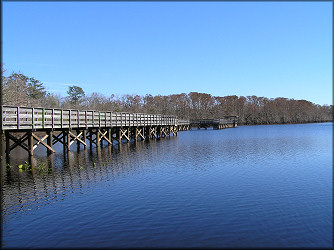
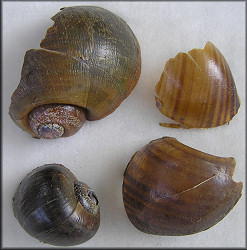
not been verified. On 3/4/2009 a survey of the wooded shoreline near the fishing pier/walkway (pictured below, left) yielded a number of intact empty shells of both Pomacea maculata and P. paludosa (see image). The presence of the Pomacea maculata shells in this area suggests that the species has now colonized the northern end of the lake. |
|
|
|
|
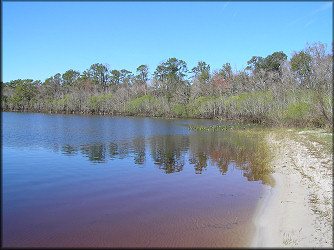
| Lake Ashby Park Fishing Pier/Walkway | Lake Ashby Park Beach |
|
|
|
|
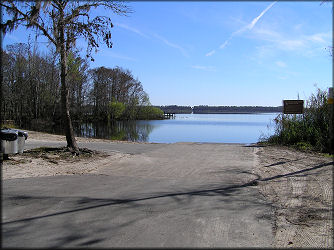
Lake Ashby Boat Ramp |
Three Partial Pomacea maculata And P. paludosa |
|
|
|